16-09-2026
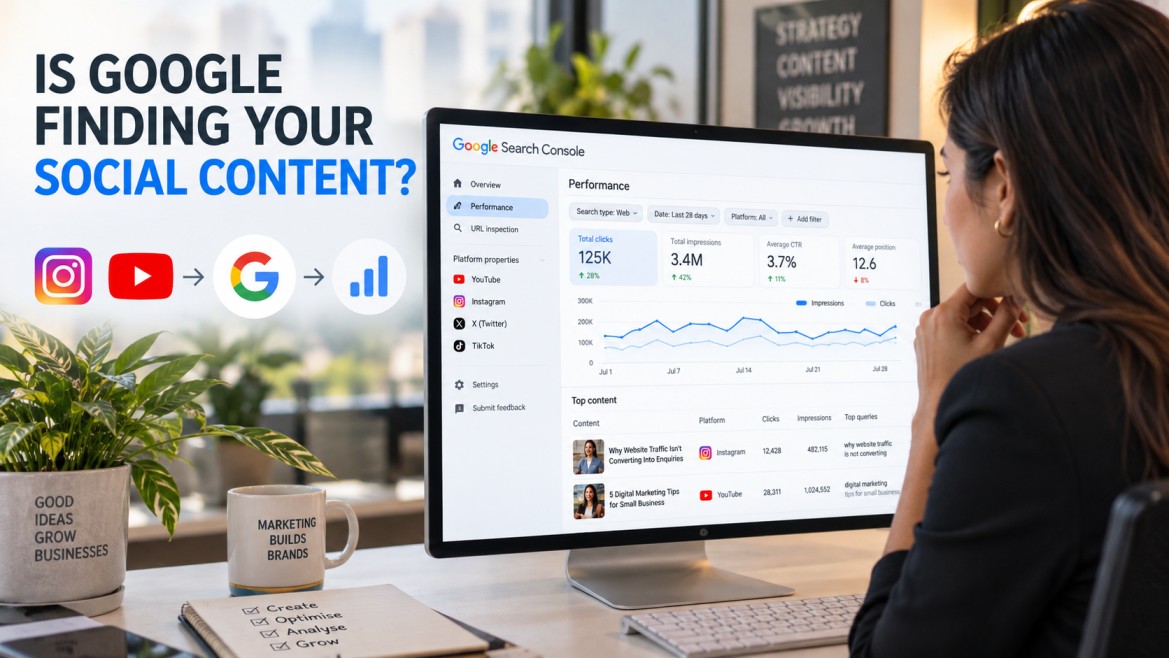
A Social Media Marketing Agency in Delhi can no longer measure social content solely by likes, followers, reach or views within Instagram and YouTube. In July 2026 Google announced platform properties within Search Console that let verified account owners understand the performance of content created on Instagram, X and YouTube when discovered via Google.
Such brands should re-evaluate their approach to social media.
A Reel might be performing average on Instagram, but is gaining impressions within Google weeks later. A YouTube video might begin to rank for a useful search query. This has previously gone unnoticed in many marketing reports.
Social Content Is No Longer Only An In-App Asset
For years brands have been measuring engagement on posts through Instagram Insights and YouTube Analytics. They still matter; however, social posts can also surface when someone is just searching on Google. Google's own documentation shows that social and video content can appear in places such as short-video results, recent-post carousels, and more.
This means a social post could have a second life after first being seen inside the social platfrom, and later showing up for someone who is actively searching on Google for that topic.
For a company that works with the Social Media Marketing Agency in Delhi, this means a brand new question can be asked:
Which social posts are attracting search demand, rather than just social reach?
This insight can have a major impact on a content calendar.
What Can You Actually See In Search Console?
Google’s platform properties offer more than a basic traffic number,
brands can see clicks, impressions, top posts and the queries people used before landing on social or video content – then, the Insights report can show recent trends and stronger content, too. Google later released this globally and released guidelines for comparison across social platforms. Marketers can spot trends in the rising query groups, see what posts are driving search traffic, compare formats and export for deeper analysis. That’s useful because a normal social report might tell you:
“Reel A had 18,000 views”
but the Search Console can answer the different question:
“What were people searching for when finding Reel A via Google?”
A Post With Fewer Likes May Be More Valuable
This is where companies need to rethink how they measure engagement for everything.
Think about a Digilinkers Instagram Reel about why website traffic isn't converting into enquiries. It gets far fewer likes than a random, trendy office Reel.
Surely, the obvious winner is the latter?
Maybe not. Say this educational Reel continues to get resurfaced by Google on relevant search results for website leads or conversions issues. These are users who have a specific issue and are likely to be more receptive to a solution.
Therefore, the Reel with fewer likes has greater potential to deliver long-term business value. And that's something good SMO Services in Delhi should be measuring. They should be measuring both types of engagement: content that delivers reach and attention, and content that continues to get discovered as an answer to a specific query.
You need both, but they shouldn't be measured the same way.
Search Queries Can Improve Your Social Content Calendar
One of the most valuable features of this update is query data.
If your YouTube video keeps getting found by people searching terms like “why SEO traffic is not converting,” it means you have an engaged audience interested in a relevant topic.
You can turn this into:
- A follow-up Reel;
- A carousel of questions and answers;
- An in-depth article;
- A YouTube long video;
- A service page FAQ.
Google even suggests using rising search themes and older posts getting traction as a basis for new content or repackaged old articles. That’s why Best SMO Services in Delhi should think about combining social media and SEO strategies instead of keeping separate teams for YouTube, TikTok, Facebook, and SEO. These two areas can fuel each other: SEO finds out what people search for, and social media finds out what people like to read/watch/discuss.
Instagram And YouTube May Behave Very Differently
The same topic may not perform the same way across different kinds of media.
A short Instagram reel may have a higher engagement rate than a longer YouTube video. The same topic may perform better on one social media network versus another. One may rank well within the ecosystem of a platform, while the other may drive more traffic from Google searches.
Thanks to the new Search Console features, it is now much easier to compare variations of content and see which ones are resonating most with your audience.
For instance, Google notes that marketers can now compare long vs. short-form content, assess performance by devices or countries, and export data across different platforms for a apples-to-apples view of performance.
A Delhi-based Social Media Marketing Agency must use this data to inform their decisions about what content to create more of, less of, where to post it, and how to optimize the content that will yield the best results. The answer will always be found in the data, and not in assumptions and guesswork.
This Does Not Mean Every Post Needs SEO Keywords
There is one obvious danger here
Brands may feel that their social content can appear on Google, so they will try to stuff their captions with keywords
This misses the point - the content should still appeal to the audience on whatever platform it is being posted on.
A Reel is not a web page, so it should not behave like one. The title of a YouTube video should not be written with an eye for search engines. It should be crafted to persuade someone to watch it
Having said that, search engine visibility is an important consideration. But it should be used sparingly and the content should still be appealing to the platform's users. At Digilinkers, we recommend starting with a customer's question. We'll work on answering that in a helpful post. Then we will research the best way to help those searching for similar topics find our content. This is a far more effective way to make the most of your SMO Services in Delhi than simply trying to make every post SEO-friendly.
How Digilinkers Would Use This Data
For us, the valuable application of social-media reporting is not in adding another chart to the monthly report.
We would want to know
which social posts are getting Google impressions,
which queries are bringing people to those posts,
are older videos suddenly becoming relevant again,
does a topic perform better on Instagram or on YouTube,
can a successful social topic be developed into an SEO blog or landing-page section.
This is where social-media reporting becomes valuable to business decision-making.
A Social Media Marketing Agency in Delhi should not simply be telling you which post got the most views; he or she should be helping you understand what these metrics say about your audience.
Final Thoughts
Social media discovery is expanding beyond the confines of the social feed itself.
The visibility of Instagram posts, YouTube videos, TikToks, and X content is now measurable in part through Google Search, with Search Console providing marketers greater insight into queries, impressions, clicks, and trends.
This means that a piece of content’s success should not be evaluated or deemed “successful” or “unsuccessful” based on what happened 4 hours after publishing.
Some content can continue to deliver beyond the initial social media discovery and gain visibility over time.
As a result, the Best SMO Services in Delhi are also changing since social media performance is being evaluated not only within apps but also outside of them.
Frequently Asked Questions
1. Can Instagram Posts Appear In Google Search?
Yes. Google can surface Instagram and other social-platform content in Search, and verified platform properties can now show related performance data in Search Console.
2. Can I Track YouTube Performance In Google Search Console?
Yes. Google allows verified YouTube platform properties to view Search performance, including clicks, impressions, posts, and queries.
3. Which Social Platforms Does Google Search Console Support?
Google currently lists Instagram, TikTok, X, and YouTube for platform properties.
4. Should Social Media Captions Now Be Written Like SEO Blogs?
No. Social content should still suit the platform and audience. Search data should guide topic selection and optimisation, not encourage keyword stuffing.
5. How Can Search Data Improve Social Media Strategy?
It can show which queries lead people to your posts, which content is gaining search traction, and which topics may be worth expanding into new formats.
6. How Can Digilinkers Use This For Clients?
Digilinkers can combine social-platform metrics with Google search data to identify stronger topics, compare formats, repurpose useful content, and connect social activity with wider search visibility.